


As a novelist who grew up in rural Montana, I can’t help but notice similarities between my work as a writer and my parents’ career as farmers. In both vocations, we plant seeds and hope that they’ll grow. In both, we wait for harvest – when our wheat is ripe, when our book is read. In both, dealing with adversary is a big part of the job.
On a recent phone call, when I told my dad and sister about this essay, Dad asked, “Do you sit in a hot metal box going round and round at five miles an hour?”
Honestly, it feels like I do. The writing process is slow. And working long hours does not guarantee success. In both fields – his literal, mine figurative, we do our best, but often the elements ultimately decide. In farming this might mean hot sunny days and harvesting a beautiful crop for top dollar. Or it could mean a hail storm that destroys the fledgling wheat stalks and any chance of an income. In writing, this might mean that Hello, Sunshine (Reese Witherspoon’s production company) selects a book that then goes on to sell millions of copies. Or difficulty in finding a publisher might mean that a poignant, powerful story never sees the light of day.
Timing matters. Unfortunately, each year, timing changes. This is especially difficult for dry farmers like my parents, who had no possibility of using irrigation. Seed too early or too late, and they could miss out on precipitation. Not enough moisture at the right stage means no crop. Our yield depends on when we plant. The publishing industry also depends on timing. When I wrote the first chapters of Miss Morgan’s Book Brigade, I aimed to publish in 2014, the centennial of the Great War, in hopes that journalists would use this commemoration to highlight the work of the American Committee for Devastated France, the all-woman unit who worked just miles from the front and received the war cross medal for their courage under fire. I hit a lot of bumps in the writing and research, and the book was published in 2024, a decade late with very little media coverage.
Trends are important. For farmers selling wheat, the heyday was the carb diet era, when consumers filled their plates with bread and pasta. Now that more people are focusing on their protein intake, farmers have pivoted; peas are the new wheat. It is the same for writers. There was a time when no one was interested in World War II novels; now the market is saturated. Luckily, people will always be hungry for a good story or a crusty loaf of bread.
Each year brings improvements to machinery. In high school, I started with a typewriter, hitting those keys slowly so as not to make mistakes, especially at the bottom of the page. Then came the word processor with its tiny screen. Dad and I both wrote on them. He sent letters to politicians in Washington and to my sister and me when we moved away. Then came computers with their large screens illuminating our words. In farming, the gamechanger for Dad was air conditioning. Before that, he said it got so hot in the cab of his tractor that you could crack an egg and fry it on the floor.
Despite the changes in technology, in both careers, it is still a person sitting alone, going around in circles. The work is solitary. I stare at the words on my screen the same way Dad stared out the window of his tractor. Both careers underline the reality that we are all essentially alone.
In dry farming and writing, we face periods of drought. A good harvest does not guarantee success the following year. My first novel came out in 2009, my next in 2021. From 2010 to 2019, though I went to work every day, I had nothing to show for my toils. I pitched my manuscript to agents and received nothing but rejection or silence. That decade was the most depressing of my career. Every week, new books hit the shelves while mine remained stuck in my computer. To combat feelings of frustration and disappointment, I stayed off social media and out of bookstores. To earn a living, I took a second job at an engineering school. Teaching allowed me to feel like a success – as with my first novel, I received reviews in the form of student evaluations. Their kind words sustained me.
Dry farming and writing both have lines – lines in a field or lines on the page. I rarely discuss about how hard it has been to hoe this row, to deal with noxious weed like disappointment and rejection, in order to type up words just so and get them published. But I’m sharing my experience with you now. So that despite appearances, you’ll realize that we all have years - and even decades - of failure and disappointment.
Where I was raised, because there is little rainfall, many dry farmers use the technique of strip farming. A field is planted, while the one beside it remains fallow. (Fallow: unproductive, bare, idle, crop-free, uncreative, inactive.) Though it looks like nothing is happening, the land recuperates nutrients and moisture so that the following year, it will be fertile. And maybe this is what we need to remember. It’s okay to take a break and try something else. It’s okay to persevere. However you spend your time, whichever projects you’re working on, whatever your calling, I wish you a golden harvest.
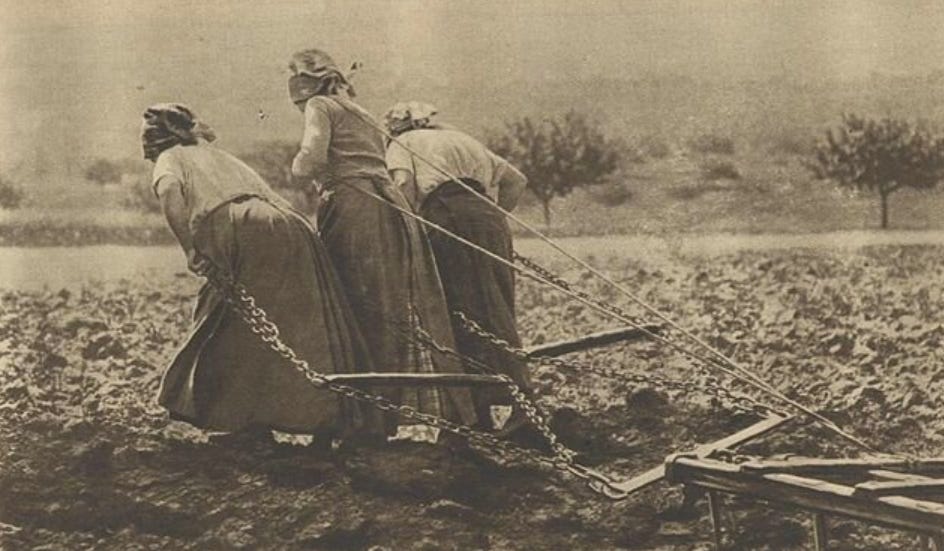
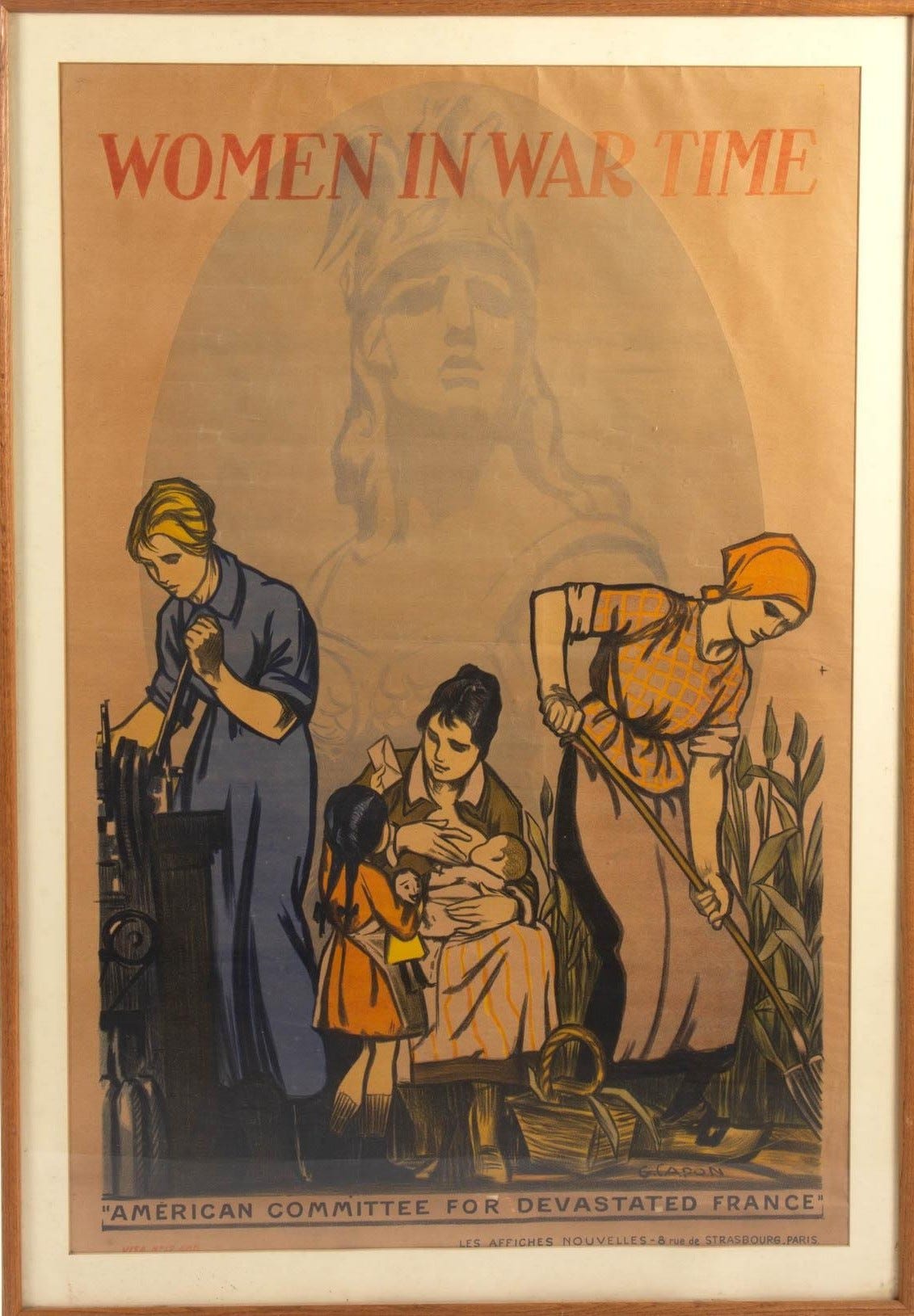
Last month, I wrote about the volunteers of the American Committee for Devastated France (CARD) who worked as farmerettes. This month, I share some images of Frenchwomen in the North who kept family farms going during World War I. Men were in the army, and livestock was taken for use by the military.
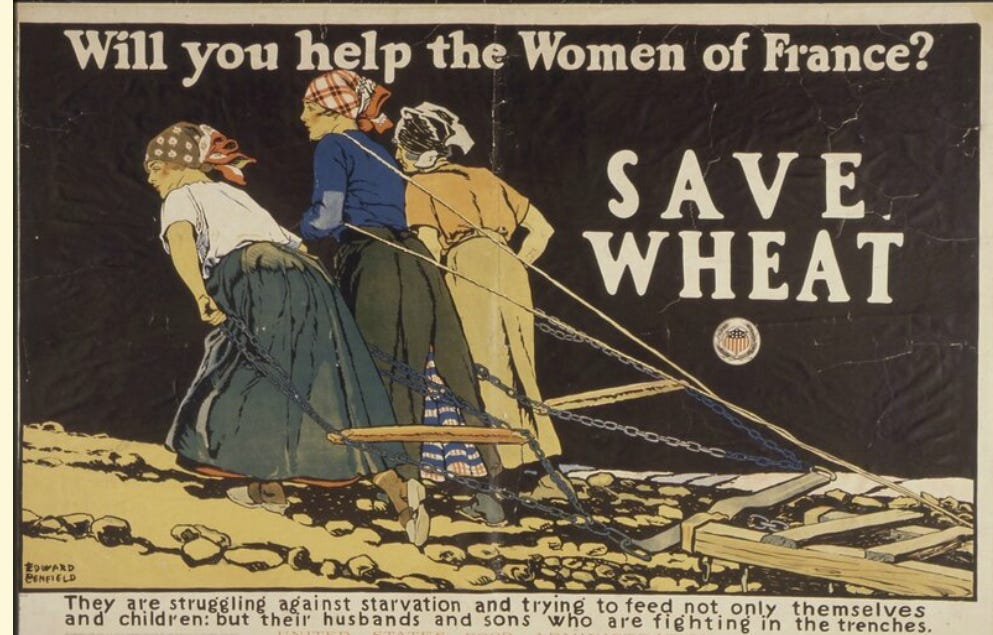
Below a CARD poster shows three elements of Frenchwomen - raising children, working in factories, and toiling in fields. In the background is the allegory of Victory.
With destruction all around them, Frenchwomen did the heavy lifting of keeping farms going. You can see other photos in my April newsletter.


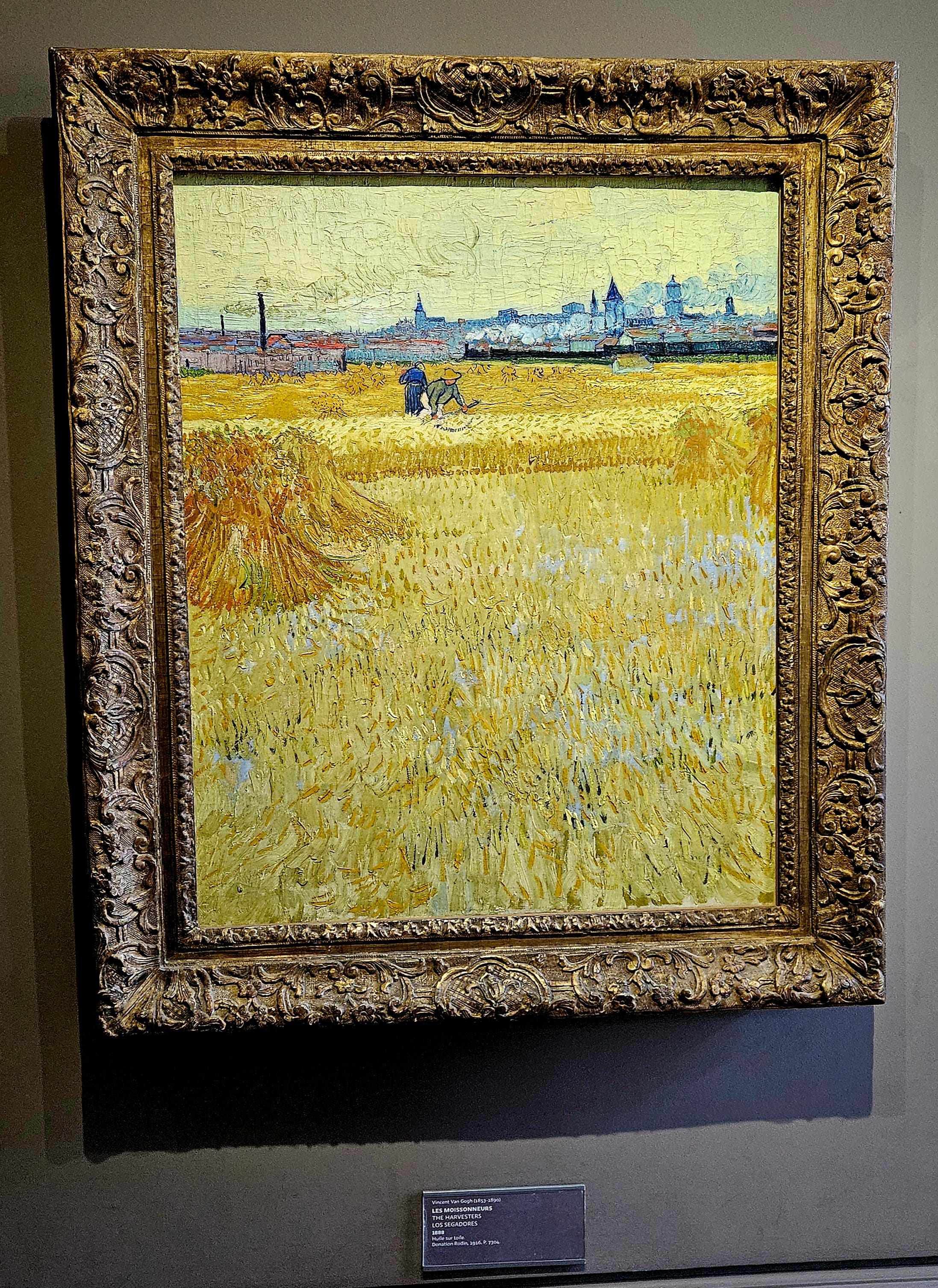
In keeping with the theme of harvest, on my birthday at the Rodin Museum, Eddy and I snapped this photo of The Harvesters by Van Gogh. A man and a woman work in the field without machinery. In the distance is the train, a symbol of modernity and what is to come.
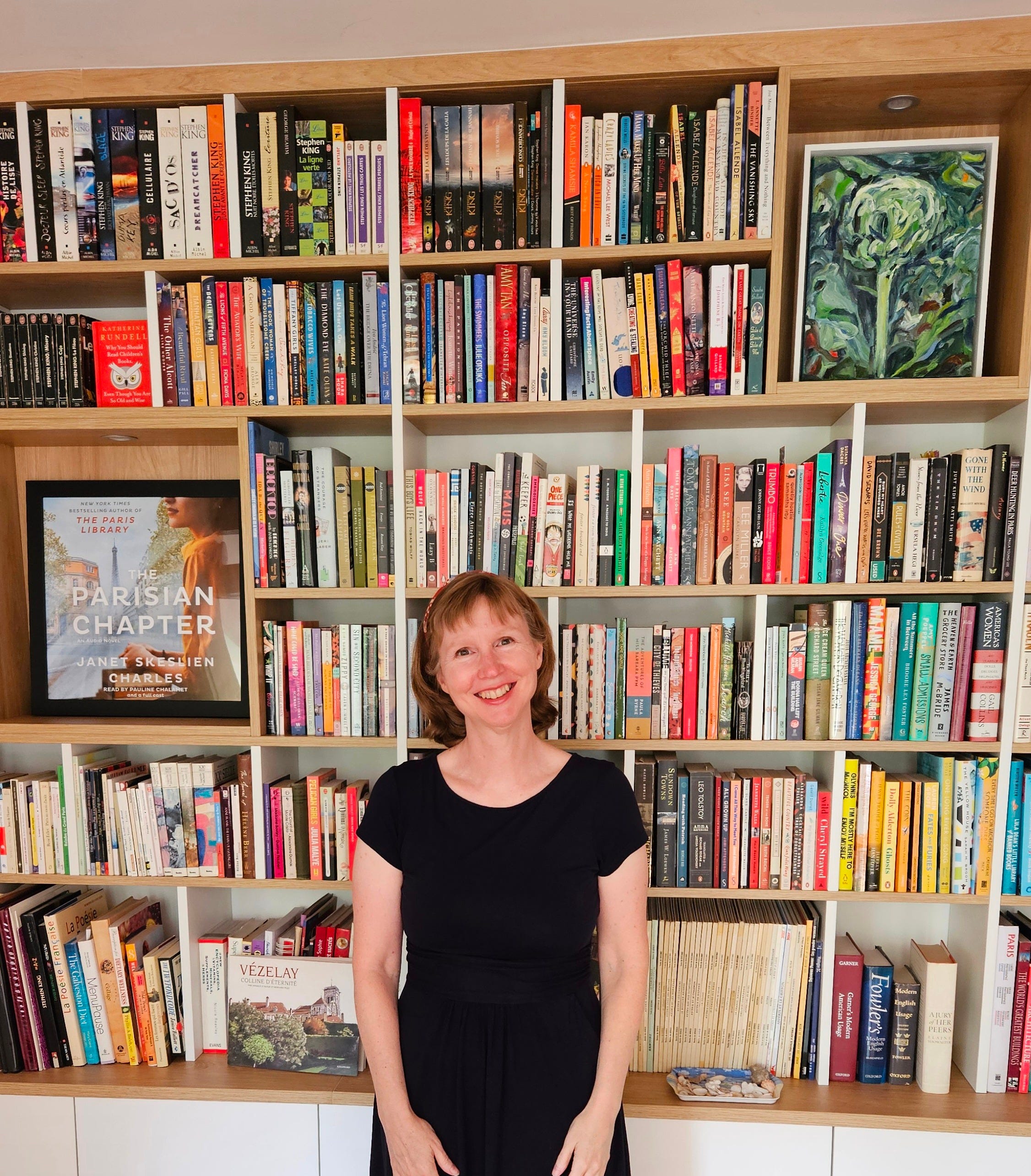
My mom and I loved watching makeovers together, loved seeing the transformations from before to after. She had a gift for making things beautiful, whether through the quilts she sewed or the artwork, colors, and furniture she chose to furnish our home. I didn’t inherit this gift, so Eddy and I hired Bois et Blanc to create our bookshelves. What do you think?


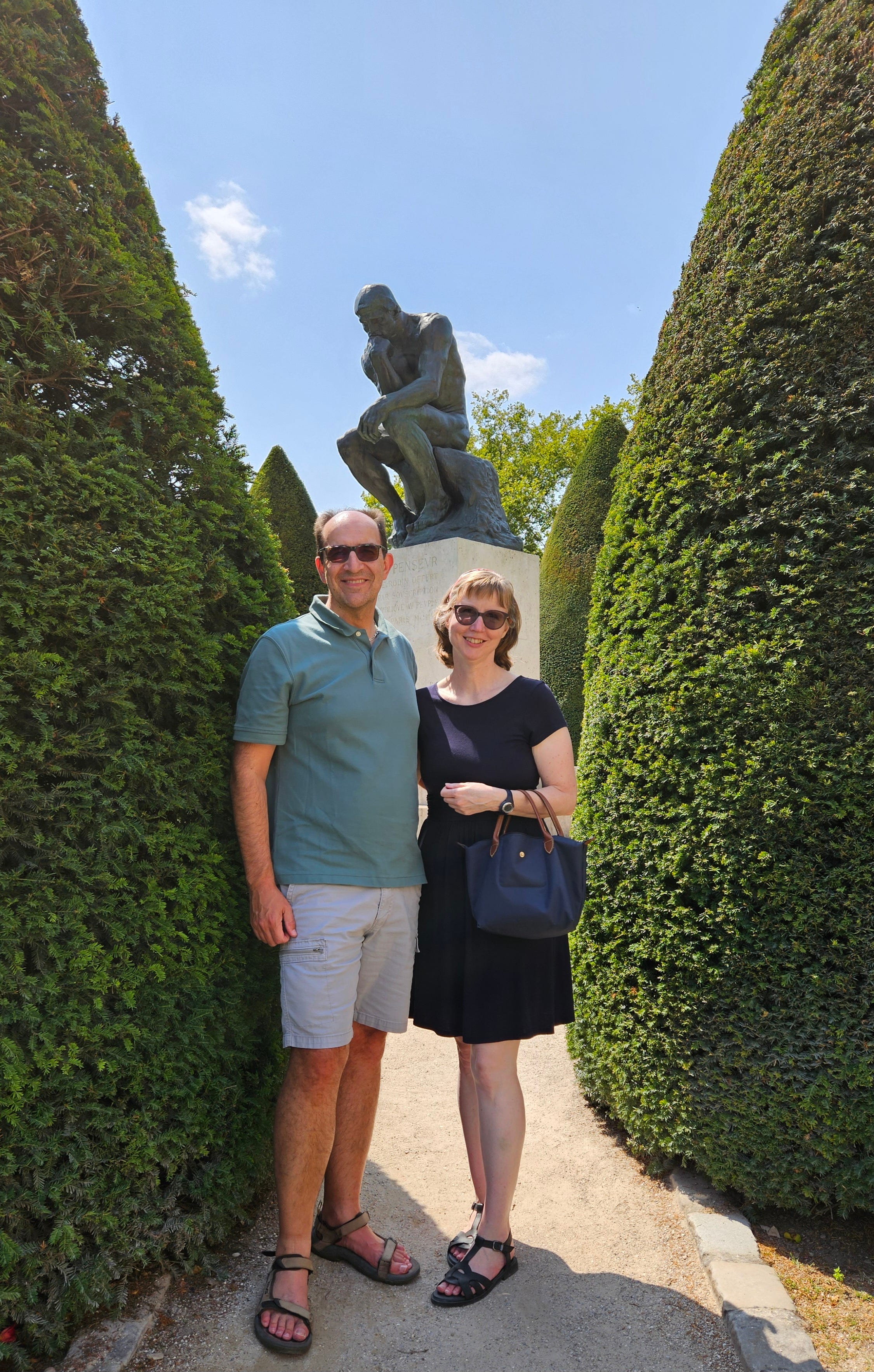
This week, Eddy and I celebrated our 25th wedding anniversary and my 54th birthday. I’ve lived in France for almost half my life. I feel lucky to be interviewed by Lindsey Tramuta in her series about Americans who have moved to France. I appreciate this series because each person’ story is unique - arriving in surprising ways and staying for different reasons. I hope you’ll enjoy our conversation!
Thank you for subscribing to my newsletter. I appreciate your support.
My best,
Janet
Janet, I can't tell you how much comfort and inspiration I draw from this flawless post. I'm not sure how exactly but I feel there is a whole novel that could grow out of this essay. In a time when us historical fiction writers need to pivot, it's comforting to know about the fallow fields. Thankyou !
What a surprising job comparison, very interesting!!! Thanks 😊
I also like your new bookshelves. Thanks "Bois et blanc".
Happy harvest for all farmers and writers ❤️